
Car Care Tips
How Often Should You Detail Your Car in North Carolina's Climate?
North Carolina's pollen, humidity, and UV swings wear on a car's paint faster than most places. Here's a season-by-season guide to how often to wash, detail, and protect your vehicle around Lincolnton, Gastonia, Belmont, Mount Holly, and Charlotte.
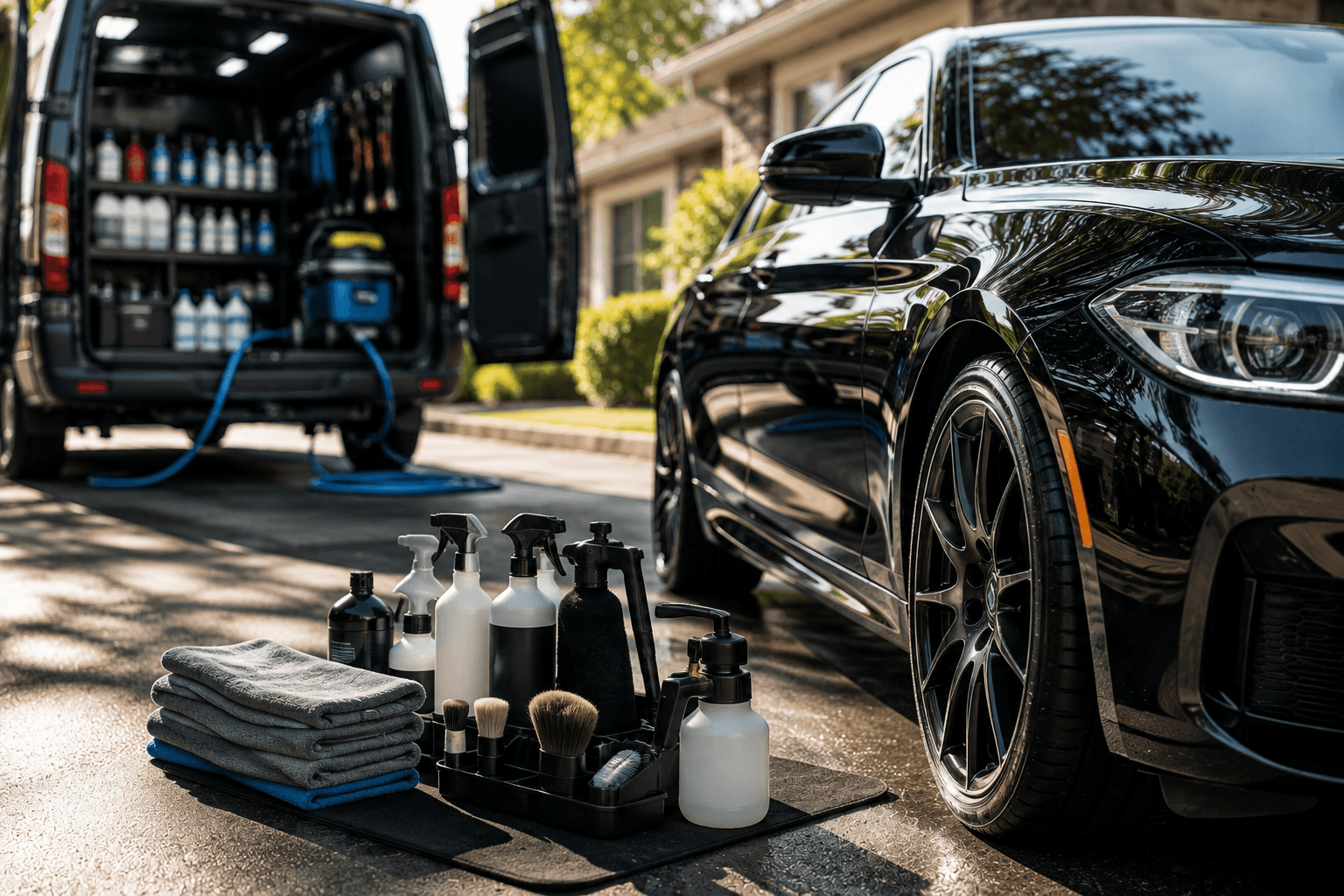
"How often should I get my car detailed?" doesn't have one right answer — it depends on how a car is parked, how it's driven, and the weather it sits in. In the Charlotte metro and foothills, from Lincolnton and Gastonia out to Belmont, Mount Holly, and Charlotte itself, that weather does more damage to paint over a year than most drivers expect. Pollen, summer humidity, UV exposure, and the occasional ice event all take a toll on different schedules, so the right answer changes with the season.
North Carolina's four detailing seasons
Piedmont North Carolina doesn't have one climate — it has four distinct stretches that each put different stress on a vehicle's paint and interior. Planning around them, instead of detailing on a fixed monthly schedule, gets you more mileage out of every wash.
- Spring (March–May): Pine and oak pollen coats everything in a fine yellow film for weeks, and it's acidic enough to etch into unprotected clear coat if it sits through a few rain-and-dry cycles. Plan on a wash every 1–2 weeks during peak bloom, even if the car looks clean between pollen drops.
- Summer (June–August): Intense UV fades trim and fabric, afternoon thunderstorms leave mineral-heavy water spots, and tree sap and bug splatter bake onto paint in the heat. A wash every 3–4 weeks, with wax or ceramic protection, keeps summer grime from becoming a permanent stain.
- Fall (September–November): Falling leaves and tannins can stain paint and clog cowl drains, and cooler, wetter days slow down natural drying. Every 3–4 weeks is usually enough, with extra attention to clearing leaf debris from around the windshield and doors.
- Winter (December–February): NC winters are mild, but occasional ice events mean road salt and brine on bridges and overpasses. After any snow or ice event, a wash — especially around the wheel wells and undercarriage — prevents that salt from sitting against paint and trim for weeks.
A simple frequency guide by how you park and drive
Season aside, how and where a car spends most of its time matters just as much. As a general starting point:
- Daily driver, garage-kept: a wash every 2–3 weeks and a full detail every 2–3 months is typically enough to stay ahead of grime.
- Daily driver, parked outside: closer to every 2 weeks for a wash, with a full detail every 4–6 weeks — this is where a recurring Monthly Maintenance Plan pays off, since it keeps protection topped up before pollen or UV damage can set in.
- Ceramic-coated vehicles: the coating does a lot of the work, but a maintenance wash every 3–4 weeks keeps it performing, with a full correction and inspection once or twice a year.
- Work trucks and fleet vehicles: frequency depends on use, but biweekly to monthly washes keep job-site dust and grime from building up into something that needs correction later.
Signs it's time, even if the calendar disagrees
Schedules are a starting point, not a rule — a few visual cues are a more reliable signal that it's time for a wash or detail:
- Water no longer beads on the paint and instead sheets or sits flat — a sign wax or sealant protection has worn off.
- A hazy film remains on the paint even after rain, which usually means pollen or mineral deposits have bonded to the clear coat.
- Interior dust, pet hair, or odors build up noticeably between normal cleanings.
- Swirl marks or dullness show up under direct sunlight, a sign it's closer to paint correction time than a routine wash.
Why mobile detailing fits NC's unpredictable weather
Pollen season doesn't wait for a free Saturday, and neither does a thunderstorm-driven water-spot problem. Since we bring our own water and power to your driveway or parking spot in Lincolnton, Gastonia, Belmont, Mount Holly, or Charlotte, it's easy to book around whatever the season is doing instead of working your schedule around a shop's. A recurring Monthly Maintenance Plan is the easiest way to stay ahead of all four seasons without having to track pollen counts yourself.
Keep your car ahead of the season
A Monthly Maintenance Plan keeps pollen, UV, and road grime from ever getting the upper hand — get a free quote to get started.